5 Signs Your Home Needs a Water Softener
5 Signs Your Home Needs a Water Softener
Hard water is sneaky.
Unlike a leaky faucet or a clogged drain, it doesn't announce itself with a loud problem you can fix in an afternoon. It works slowly, day after day, leaving subtle deposits on your dishes, your skin, your appliances, and your plumbing. Most Southwest Florida homeowners live with hard water for years before realizing their water — not their soap, not their dishwasher, not their lotion — is the actual problem.
Here are the five most common signs your SWFL home has hard water serious enough to warrant a softener. The more of these you recognize, the stronger the case.

1. White, chalky residue on faucets, showerheads, and glass surfaces
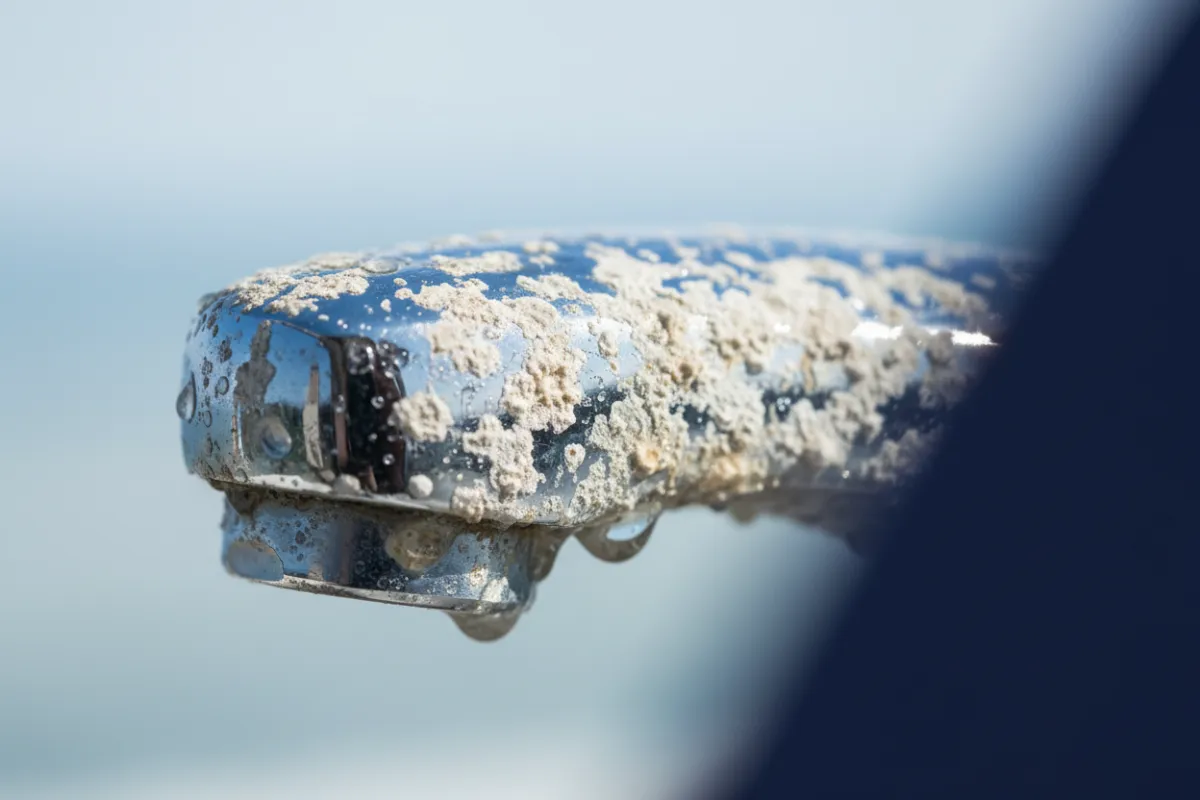
This is the most visible giveaway. If you see whitish-gray crust building up around the bases of your faucets, on the perforated tips of your showerheads, or as dried spots on glass surfaces — that's calcium scale, the signature deposit hard water leaves behind.
Specifically: every time water sits on a surface and evaporates, the calcium and magnesium dissolved in it stays behind. Over weeks and months, those deposits build up into the chalky white residue you can scrape off with your fingernail.
In Southwest Florida, you'll typically see this:
Around the base of every kitchen and bathroom faucet
On the perforated head of every showerhead (gradually clogging the spray pattern)
On the inside of your dishwasher door
On glass shower doors (the hardest to clean — see Sign #2 below)
On stainless steel and chrome fixtures, leaving a permanently dulled look
If you've ever scrubbed your shower door and watched the spots come right back within a few showers — that's a high-hardness signal. In SWFL water at 12-20+ grains per gallon, new spots can form within a single use.
2. Spots and cloudiness on dishes and glassware
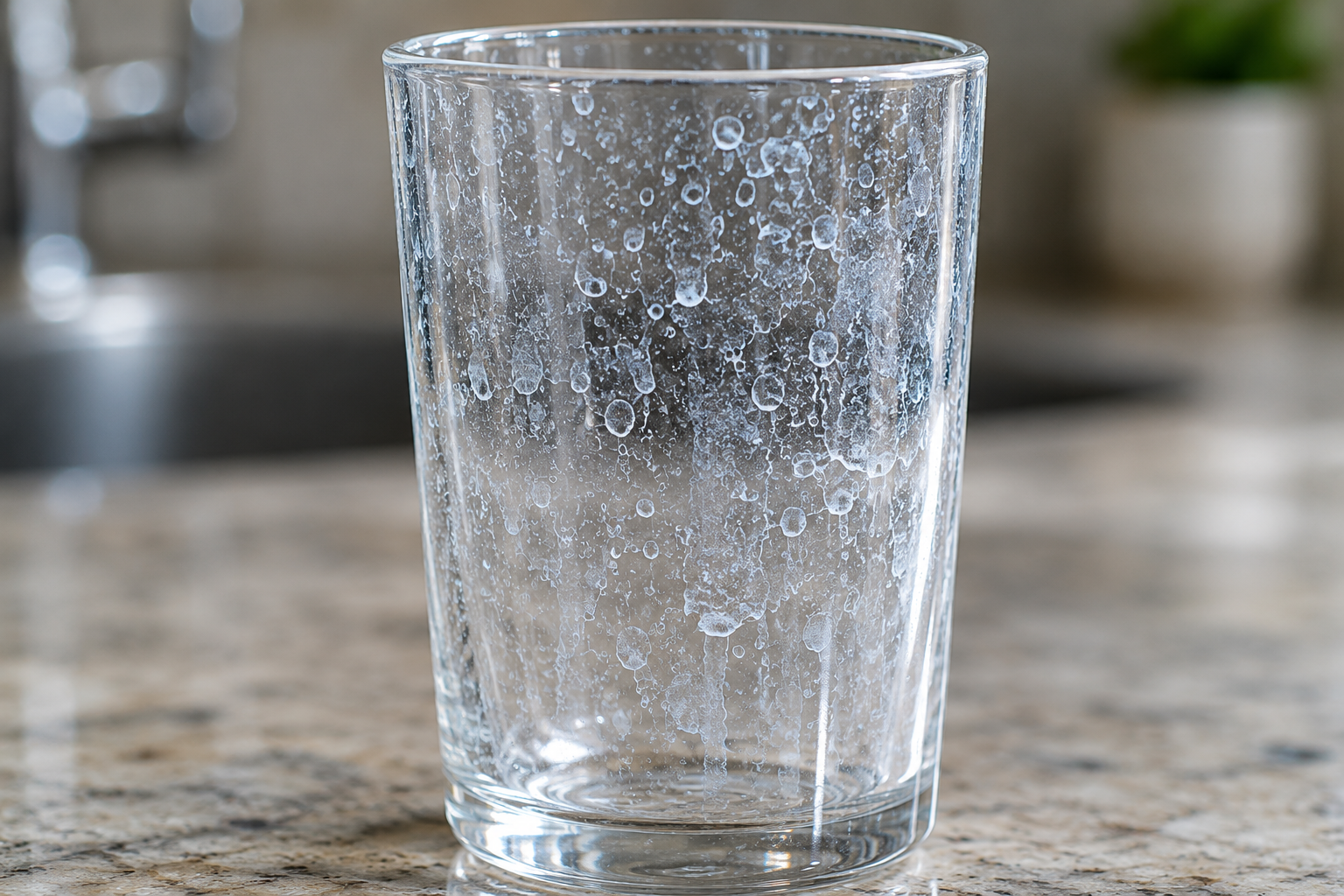
If your dishes come out of the dishwasher looking spotty, streaky, or covered in a hazy white film — even after running rinse aid — it's almost certainly hard water.
The hazy white film on glasses isn't just deposits sitting on the surface. Over time, hard water actually etches into glass. The calcium and magnesium ions chemically react with the silica in the glass, creating microscopic pits that scatter light and create permanent cloudiness. Once etching has occurred, no amount of scrubbing, soaking, or dishwashing will restore the original clarity.
This is why so many older SWFL homes have permanently cloudy glassware and shower doors that look "dirty" no matter how often they're cleaned. The damage is in the glass itself, not on it.
The good news: a water softener prevents future etching. The not-so-good news: anything already etched stays etched.
3. Dry, itchy skin and dull, brittle hair after every shower
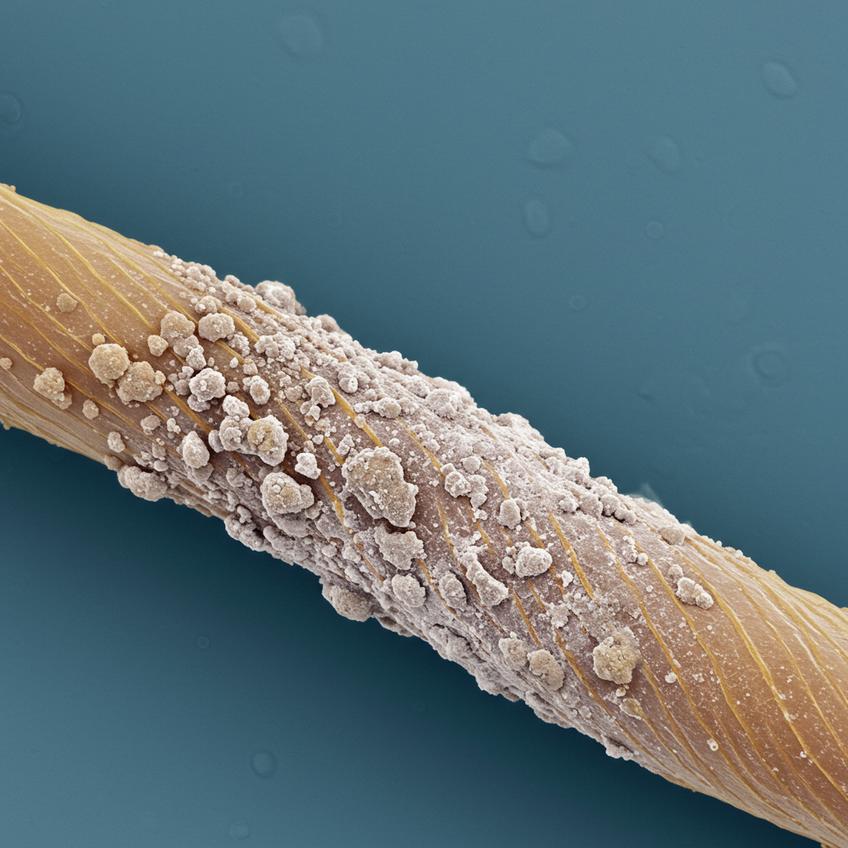
Most people blame their soap, their shampoo, Florida humidity, or simply "getting older." But if your skin feels dry, tight, or itchy after every shower, and your hair feels rough or doesn't respond to conditioners — your water is the most likely culprit.
Two things happen when you shower in hard water:
Soap doesn't rinse clean. Hard water reacts with soap to form a sticky, insoluble residue (the same "soap scum" that builds up on shower walls). That residue clings to your skin and hair after every wash. It clogs pores, dulls hair, and leaves a film that no amount of rinsing fully removes.
Skin's natural oil balance gets disrupted. The minerals in hard water strip away your skin's natural protective oils, leaving it dry and more prone to irritation. People with eczema, psoriasis, or sensitive skin often see noticeable flare-ups in hard-water households — and equally noticeable improvements after installing a softener.
Switching to soft water for the first time is often a strange experience. The water feels "slippery" because soap actually rinses off completely. Most people think their skin is still soapy when really, it's just clean for the first time in years.
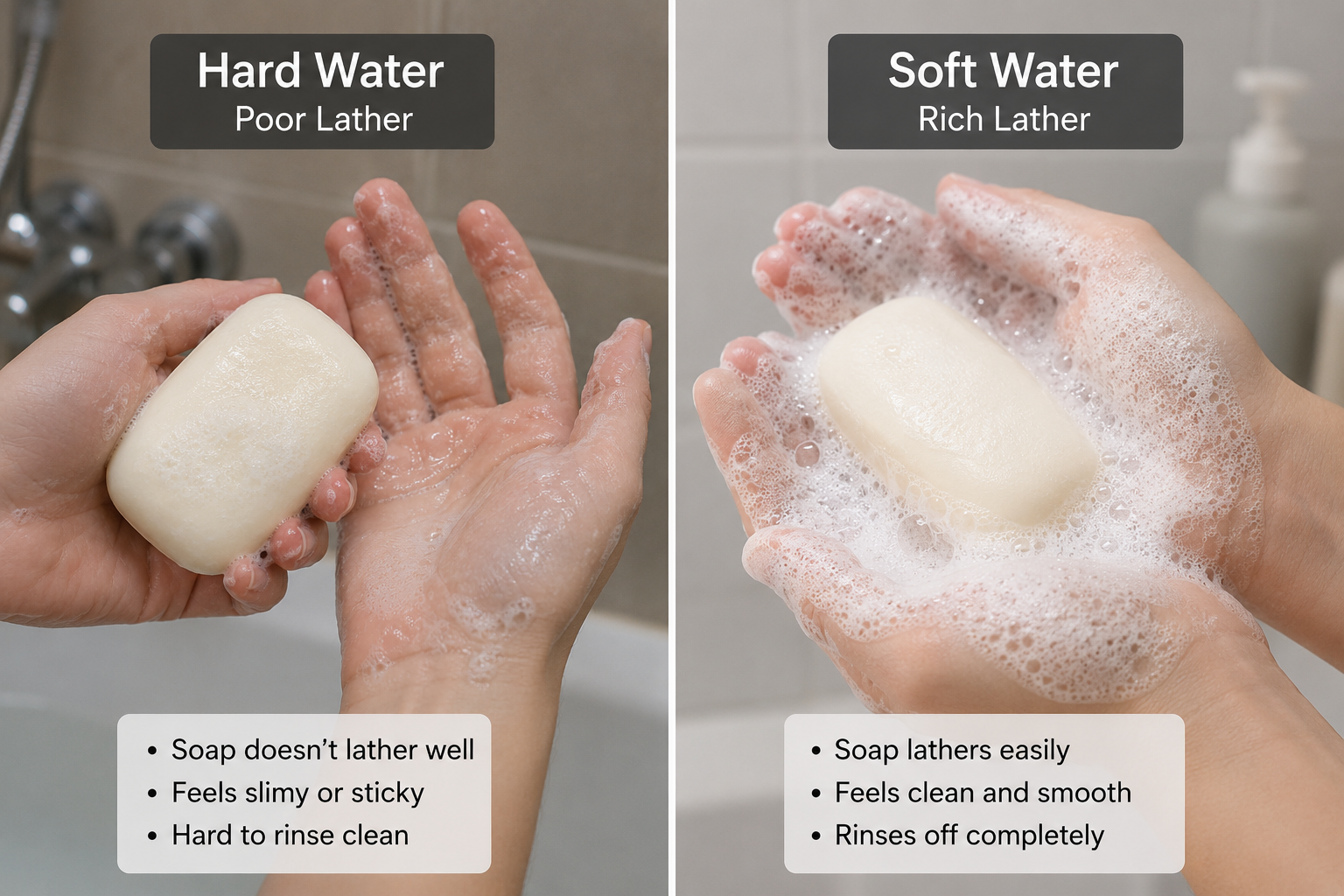
4. Soap and detergent that doesn't lather or clean well
This shows up in three places at once.
The shower. Your shampoo barely lathers. Your body wash feels thin. You need way more product to get the same clean feeling.
The laundry room. Your clothes come out of the wash feeling stiff or rough. Whites look dingy over time. Detergent residue builds up on dark clothes. Towels feel less absorbent than they should.
The kitchen. Hand soap and dish soap don't lather. Dishwasher detergent leaves a film on dishes.
In all three cases, the cause is the same. Hard water minerals bind with the active ingredients in soap and detergent, neutralizing them before they can do their job. The water is essentially deactivating your cleaning products as you use them.
The cost over time is real. Most softener manufacturers cite 50-75% reductions in soap, shampoo, and detergent use after installation. That's not a marketing claim — it's the direct consequence of soap finally being able to do its job. Add up the cost of detergent, shampoo, body wash, dish soap, and laundry pods over five years and the savings alone often pay for a significant portion of the softener.
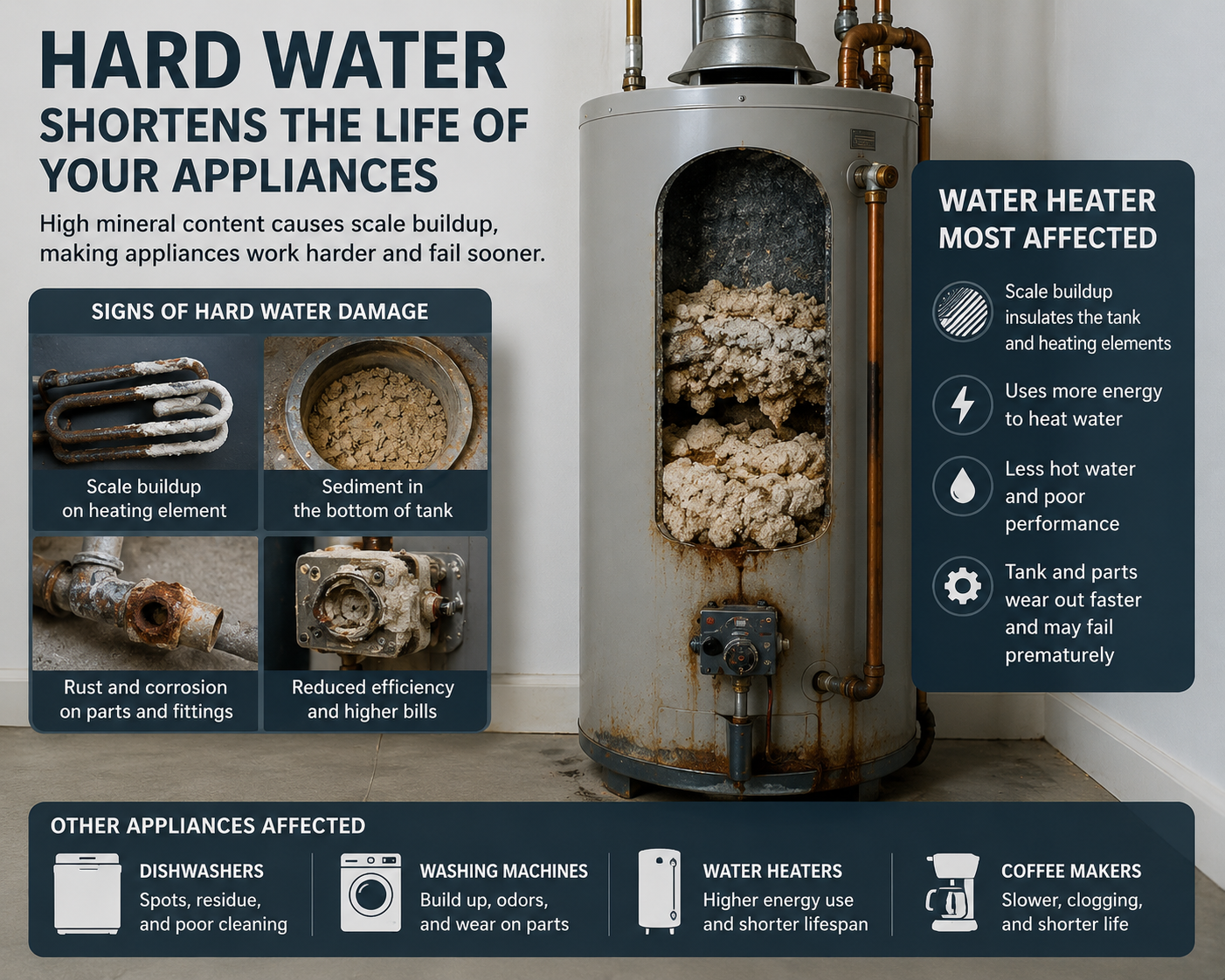
5. Appliances failing earlier than they should — especially your water heater
The last sign is the most expensive: your water-using appliances are quietly dying years before they should.
The biggest casualty is your water heater. Designed to last 12-15 years, water heaters in hard-water homes often fail within 5-8 years. The reason is scale buildup. Calcium and magnesium precipitate out of hot water and deposit on the heating element (in electric heaters) or the bottom of the tank (in gas heaters). Over months and years, those deposits act as insulation — making the heater work harder to heat the same water, which raises your energy bills AND shortens the unit's life.
Beyond the water heater, hard water silently damages:
Dishwashers — scale on heating coils and spray arms reduces cleaning effectiveness and lifespan
Washing machines — clogged inlet valves, reduced wash performance, premature pump failure
Ice makers — slower production, mineral-cloudy ice cubes, premature breakdown
Coffee makers, kettles, humidifiers — visible scale buildup, eventual failure
Faucet cartridges — earlier failure of single-handle faucets
Showerheads — clogged spray channels reduce flow over time
You don't notice this damage day-to-day. You notice it when your six-year-old water heater starts leaking and a replacement runs $1,500-$2,500 installed. Or when your dishwasher dies in year seven instead of year fifteen. Or when you're replacing showerheads twice as often as the manufacturer expected.
A water softener doesn't just improve daily life — it extends the useful life of every water-using appliance in your home, often by years. For most SWFL homeowners, the math on appliance protection alone justifies the investment, before you even count the soap savings, the energy bill reduction, or the daily quality-of-life improvements.
So how many of the 5 do you have?
If you have one or two, you have noticeable hard water and a softener would meaningfully improve daily life and protect your appliances.
If you have three or more, you're losing real money to hard water every month — in higher detergent use, faster appliance turnover, and wasted energy — and the case for a softener is strong.
If you have all five, you're a textbook Southwest Florida homeowner. Welcome to the limestone aquifer. The good news: a softener fixes all five.
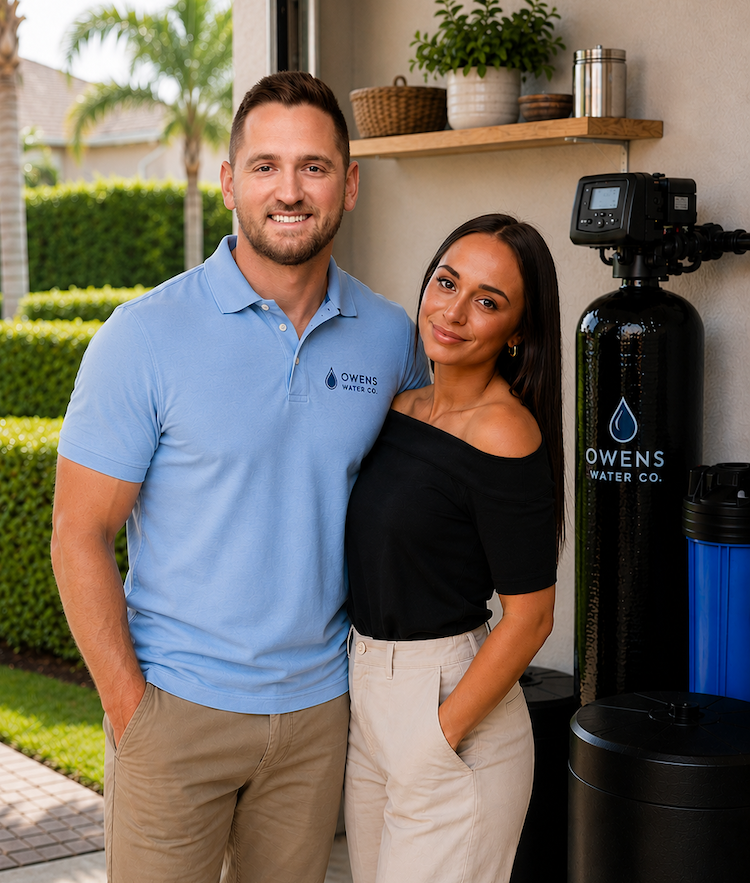
A note from our family
We started Owens Water Co. because we got tired of watching SWFL homeowners pay $10,000 or more for systems that should cost a fraction of that. Same NSF-certified equipment as the big-name competitors, same licensed and insured plumbing partners, honest pricing.
If you recognized your home in this list and want a straight, no-pressure quote, call or text us at (239) 256-4014. We'll give you an honest answer about whether you actually need a softener and what it should actually cost — even if that answer turns out to be "you probably don't need one."
— Alex and Annie, Owens Water Co. Bonita Springs, FL